



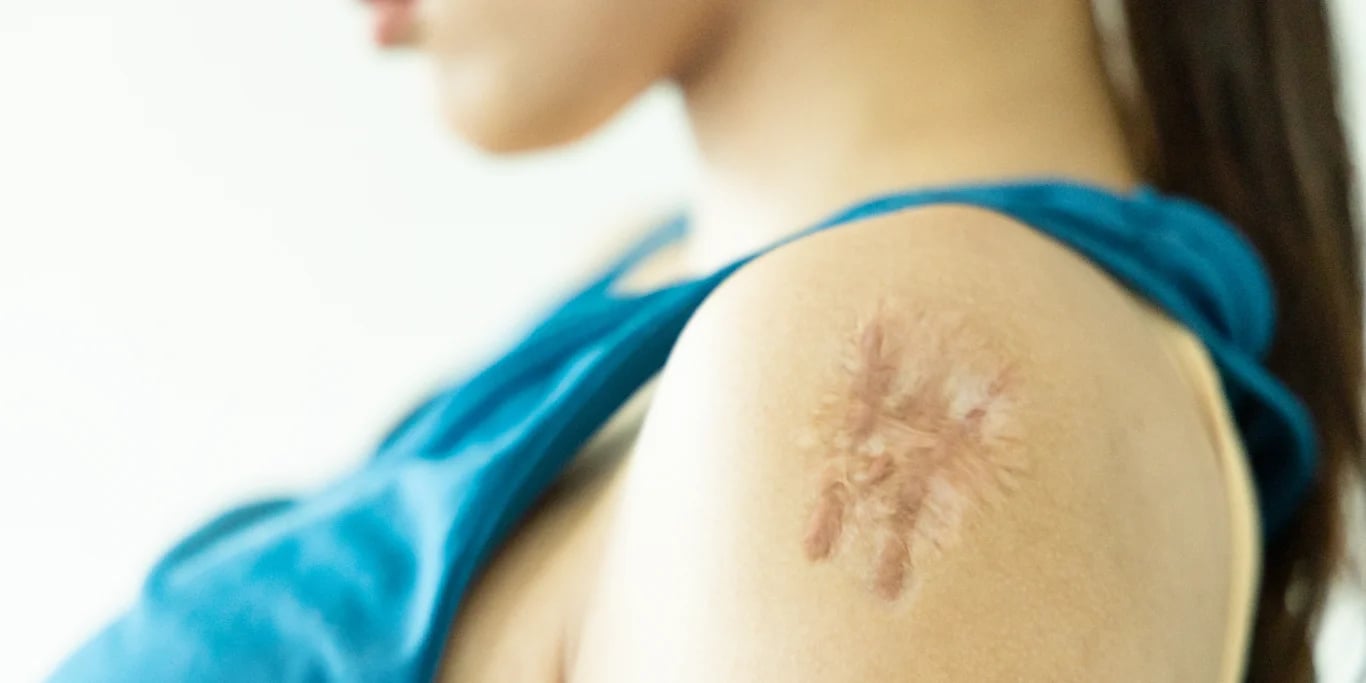
Having a keloid removed only to watch it grow back can be incredibly frustrating. For some patients, the problem becomes worse with each attempt at treatment, leaving them with a larger and more difficult keloid than what was there originally.
At Lam Facial Plastics in the Willow Bend Wellness Center, Dr. Sam Lam treats patients with challenging and recurrent keloids, including people who travel to Dallas after multiple unsuccessful procedures elsewhere.
Why Keloids Are Different From Other Scars
Dr. Lam emphasizes that keloids and hypertrophic scars are different conditions. A hypertrophic scar remains within the boundaries of the original injury, whereas a true keloid grows beyond that.
That distinction matters because the treatment strategies are different. For example, Dr. Lam may use injections and lasers for hypertrophic scars, but he does not consider those treatments interchangeable with his approach to true keloids.
He also cautions against simply removing a keloid and assuming the problem has been solved. In his experience, surgical excision alone can lead to recurrence and potentially an even worse result. Dr. Lam has also found that following excision with steroid injections has not provided reliable control in the difficult cases he treats.
Dr. Lam’s Approach to Keloid Removal
For true keloids that he determines are appropriate for surgery, Dr. Lam combines careful surgical removal with low-dose radiation therapy performed shortly afterward.
Timing is a critical part of his protocol. Radiation must begin within 24 hours after keloid removal, so Dr. Lam coordinates treatment with a radiation oncologist before the surgical date. Radiation typically continues for several days.
Most keloid excisions are performed under local anesthesia. For patients traveling from outside the area, Dr. Lam still recommends having both the surgery and radiation performed in Dallas so that the two components can be properly coordinated.
A Success Story After Multiple Failed Keloid Surgeries
One recent patient came to Dr. Lam after undergoing approximately five or six previous procedures for keloids involving both ears. According to her discussion with Dr. Lam, those earlier attempts failed, the keloids returned quickly, and previous treatments had made the problem worse.
Four months after Dr. Lam treated her ears, there was no visible recurrence. That was particularly meaningful because she reported that she had never previously reached four months after treatment without the keloids returning.
Dr. Lam was very encouraged by her progress, but he was also careful not to declare victory prematurely.
Why Long-Term Follow-Up Matters
Dr. Lam considers one year without recurrence an important benchmark for successful keloid treatment. Even with this patient’s excellent appearance at four months, he explained that she was not completely out of the woods and that continued observation through one year and potentially longer remained important.
He also discussed using pressure clips on the ears if necessary, although she had not needed them at the time of her four-month follow-up.
For the patient, the improvement was already about much more than the appearance of her ears. She described being able to wear her hair up without feeling embarrassed, sleeping more comfortably because the keloids were no longer physically in the way, and being more confident.
Dr. Lam reports achieving greater than a 90% success rate with his keloid excision protocol, defining success as the keloid remaining absent for more than one year.
Schedule a Keloid Consultation in Dallas, TX
Recurrent keloids require a different strategy than ordinary scars. To determine whether Dr. Lam’s coordinated surgical and radiation approach may be appropriate for your keloid, schedule a consultation at Lam Facial Plastics.
